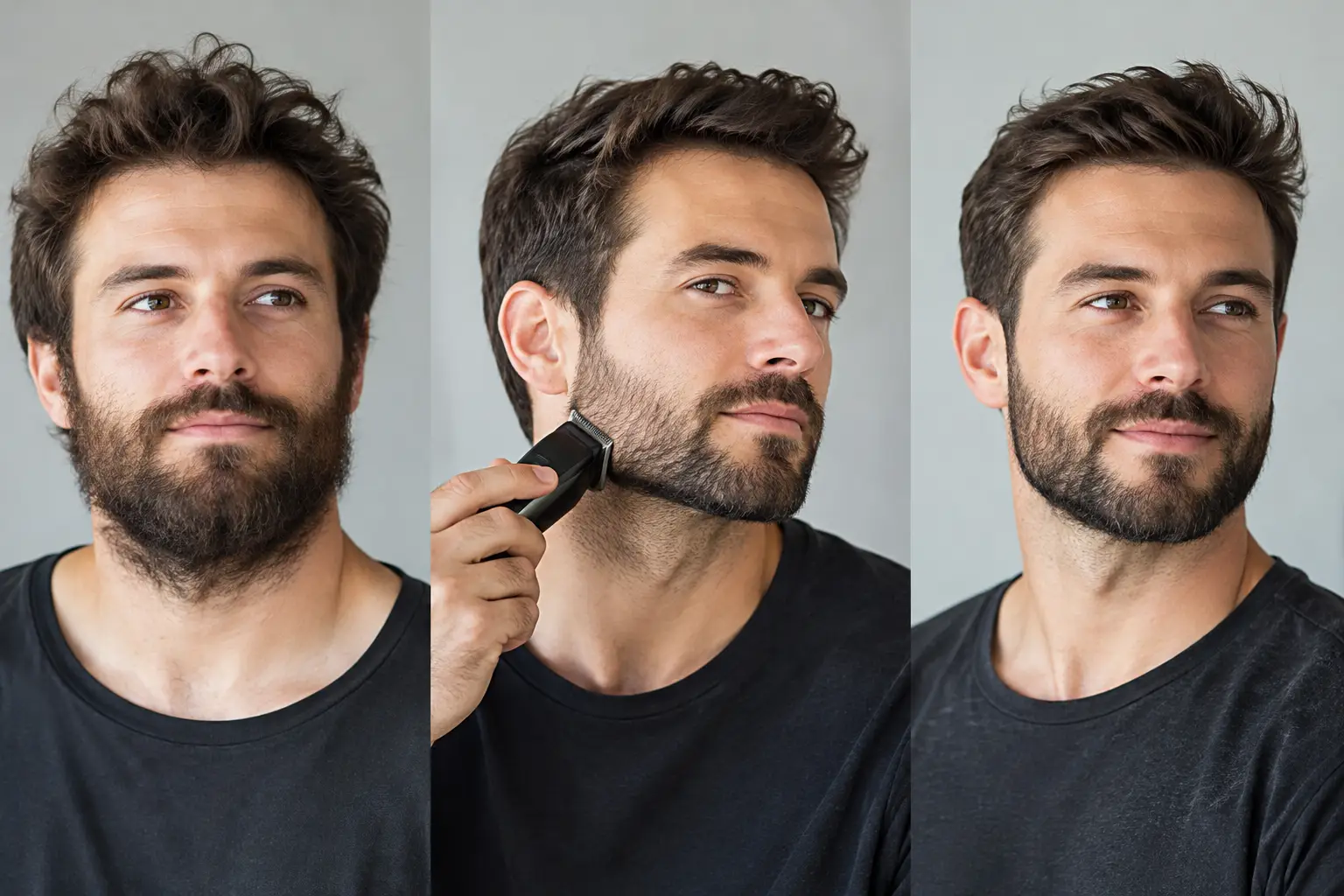

A clean fade can be technically flawless, but the wrong finishing product can flatten the shape, add unwanted shine or leave the hair looking stiff by lunchtime. The real question in pomade versus heavy clay is not which product is better in general. It is which one gives your haircut the right finish, control and character.
Both are part of our Petrol Head product line and belong in a well-stocked grooming routine, yet they create distinctly different results. Pomade delivers definition and polish. Heavy clay brings grip, texture and a more natural-looking matte finish. Understanding that difference helps you style with intention rather than using whatever happens to be in the bathroom cabinet.
Petrol Head – Pomade versus Heavy Clay: the essential difference
Pomade is built for controlled, deliberate styling. It generally has a smoother consistency, spreads easily through the hair and gives a neat, refined finish. Depending on the formula, it can range from low sheen to a classic gloss, but it will nearly always look more polished than a clay. Think side parts, comb-overs, slick backs and tight, structured quiffs where clean lines matter.
Heavy clay works differently. It has a denser, drier feel and gives the hair friction. That friction creates separation, volume and a firm hold without the reflective finish of pomade. It is the product for textured crops, messy quiffs, modern pompadours and short-to-medium styles that need to look lived-in while staying in place.
Neither product is automatically stronger. Hold depends on the amount used, your hair type, hair length and how the product is applied. The difference lies in the finish and the way each product controls movement.
Choose pomade for polished definition
Pomade suits the man who wants his hair to look intentionally styled from the first meeting to the final drink. It gives a comb a clear role in the routine, allowing you to create sharp direction, tidy partings and smooth surfaces. If your haircut has a traditional silhouette or a precise side part, pomade supports that structure beautifully.
It is especially effective on straight or wavy hair that naturally sits flat, as it helps guide the hair into place without creating excessive bulk. Medium-length hair also responds well because pomade can distribute from root to tip with relatively little effort. On very fine hair, use a light hand. Too much can make the hair separate into heavy-looking sections and expose the scalp.
The visual benefit is clear: pomade adds presence. A little sheen can make darker hair look richer and can bring a considered finish to a classic taper or a well-groomed executive style. For formal settings, occasions or any day when you want a sharper edge, that polish is hard to beat.
There is a trade-off. Pomade is less convincing when the goal is dry texture. You can use it to add shape to a crop, but it will not create the same airy, piecey movement as clay. It can also feel too noticeable in the hair if you prefer to run your hands through it throughout the day.
How to apply pomade properly
Start with towel-dried hair for a softer finish and easier control, or use dry hair when you want more concentrated hold. Warm a small amount fully between your palms before applying. Work it through evenly from the back towards the front, then use a comb for clean direction or your fingers for a slightly looser result.
The common mistake is applying pomade only to the front. That produces a heavy fringe and a weak shape behind it. Build the foundation through the whole head first, then refine the front last.
Choose heavy clay for texture and a matte finish
Heavy clay is designed for modern texture. It gives the hair a stronger, thicker feel, which is particularly useful if your hair is fine, soft or prone to collapsing. A quality clay can make a short crop appear fuller, lift a quiff at the root and preserve separation in a textured top.
It is a natural match for skin fades, burst fades and short back-and-sides cuts where the top needs contrast. The clean fade keeps the profile precise; the clay prevents the longer hair on top from looking overly neat or flat. The result is controlled but relaxed, with a finish that feels current rather than overworked.
Clay is often the better option for active days, humid conditions and hair that refuses to stay where it is put. Its grip gives you a more durable hold, and its matte finish means that a little movement during the day usually improves the look rather than ruining it. You can reshape it with your fingers without needing a comb or mirror every time.
The trade-off is that heavy clay demands better technique. Applied too generously, it can become difficult to distribute and may make the hair look dusty, dull or overly dense. Thick hair can handle more product, but even then, start small. You can always add another touch; removing excess clay mid-morning is less convenient.
How to apply heavy clay properly
Use completely dry hair for maximum grip and a true matte result. Scoop out a small amount, then work it vigorously between your palms until it becomes warm and nearly invisible. This step matters. Cold clay does not spread evenly and often leaves product concentrated in one area.
Apply through the back and sides of the longer hair first, using your fingertips to work towards the roots. Once the product is distributed, shape the front. Pinch small sections for texture, push the hair upwards for height or direct it forward for a cropped, low-maintenance finish.
For extra volume, blow-dry the hair into position before using clay. The dryer creates the structure; the clay locks in the shape. This approach gives a stronger result than relying on product alone.
Hair type, haircut and lifestyle all matter
Your ideal product should match more than the photo you showed your barber. Hair density, growth pattern and daily routine all influence the result. A high-shine pomade may be perfect for thick, obedient hair styled into a side part, but too heavy for fine hair after a long cycle to work. Heavy clay may give a great finish to a textured crop, but can feel too dry on very coarse, curly hair that needs more moisture and definition.
For short hair, clay often adds more visible benefit because it creates texture where there is not much length to work with. For medium to longer hair, pomade gives easier control and can keep the shape looking considered. If your hair is naturally curly or very dry, a clay may create too much drag. In that case, a lighter product or a small amount of pomade may make styling more comfortable.
Face shape also plays a part. If you are building height to lengthen a rounder face, heavy clay can provide lift without shine drawing attention to the product. If you are keeping a balanced, classic profile, pomade can enhance a clean parting and make the overall finish look more composed.
Can you use pomade and heavy clay together?
Yes, but only when there is a reason. Layering products is useful for men with hair that needs both a smooth foundation and strong texture. A small amount of pomade can help direct unruly sections, while a touch of clay on dry hair can add lift and separation where needed.
Avoid mixing large amounts in your palms. The finish becomes unpredictable and can leave the hair overloaded. Instead, use one product as the base, assess the shape, then add the second sparingly. For most daily styles, one well-chosen product applied properly will perform better than a complicated combination.
The Petrol Head Pomade and Heavy Clay are made for these different styling outcomes: one for controlled polish, the other for firm, matte texture. Your barber can assess your hair in the chair and show you exactly how much to use, which is often the difference between a product that merely sits in the hair and one that works with your cut.
The better choice is the one that suits your finish
Choose pomade when you want polished direction, a cleaner surface and a classic finish that holds its shape. Choose heavy clay when you want a stronger matte grip, fuller texture and the freedom to restyle with your hands. If your haircut changes, your product should be allowed to change with it.
A sharp cut deserves a finish that looks right from every angle. Take a moment in front of the mirror, learn what your hair responds to, and let the product support your own signature style rather than compete with it.
For a more professional advice and service
Book Online
at Rogue Razor Barbershop.