
A cut can look sharp when you leave the chair and still feel wrong three days later. It may sit too heavily at the crown, lose its fade too quickly, or demand more styling than your morning allows. The best barbershop services professionals look beyond the first mirror check. They shape a result around your head, face, hair behaviour and real routine, so it holds its confidence between appointments.
For style-conscious men, professional grooming is not about chasing a single trend. It is about having a dependable look: clean where it should be clean, textured where it needs movement, and finished with enough detail to feel intentional. That takes consultation, technical control and the right service for the job.
What the best barbershop services professionals see first
A skilled barber does not begin by reaching for the clippers. They begin by reading the canvas. Hair density, growth direction, cowlicks, scalp visibility, beard growth and the proportions of the face all affect what will work. A high fade can sharpen one face shape and make another appear longer. A heavily textured crop can give fine hair energy, while removing too much weight from thick hair can make it expand in every direction.
This is why the consultation matters. Bring a reference if you have one, but expect a professional opinion rather than a carbon copy. The strongest result often comes from adjusting the inspiration to suit you: keeping more length through the fringe, dropping the fade slightly, softening a hard part, or choosing a more natural neckline for easier maintenance.
Your lifestyle belongs in that conversation too. If you train daily, wear a helmet for your commute, have a conservative workplace or prefer a five-minute morning routine, say so. A good barber can build a style that works with those realities instead of giving you a look that only performs under barbershop lighting.
Precision haircutting is more than a fade
A clean fade is a marker of control. The transition from skin, foil or very short clipper work into longer hair must be smooth, balanced and matched on both sides. Yet it is only one part of a complete haircut. The shape above the fade determines whether the finished style feels modern, proportioned and personal.
Clipper work creates structure and removes bulk efficiently. Scissor work gives a barber finer control over length, texture and movement. The best service normally uses both where needed, rather than treating every haircut as the same sequence of guards. A buzz cut may appear simple, for example, but it still relies on even coverage, a considered outline and a close look at the shape of the head. Small inconsistencies are far more visible when there is nowhere for them to hide.
For longer hair, the key is weight distribution. A barber may leave length but remove density internally, allowing the hair to sit closer without looking thinned out. Or they may preserve weight at the corners to stop a style becoming too round. These decisions are quiet, technical and essential to a haircut that grows out well.
The finish tells the truth
The final ten minutes reveal the standard of the service. Detail work around the ears, temples, neckline and fringe turns a good cut into a polished one. Styling should also be purposeful. The right product is not simply the shiniest or strongest option on the shelf; it should support the finish you want without fighting your hair type.
A matte clay can add grip and definition to shorter, textured styles. Pomade offers controlled shine and classic structure. Sea salt spray can provide lift before blow-drying, while powdered wax may suit hair that needs volume without a heavy feel. A barber should show you how much to use and how to work it in. Product advice has value when you can repeat the result at home.
Beard trims need shape, not just shorter length
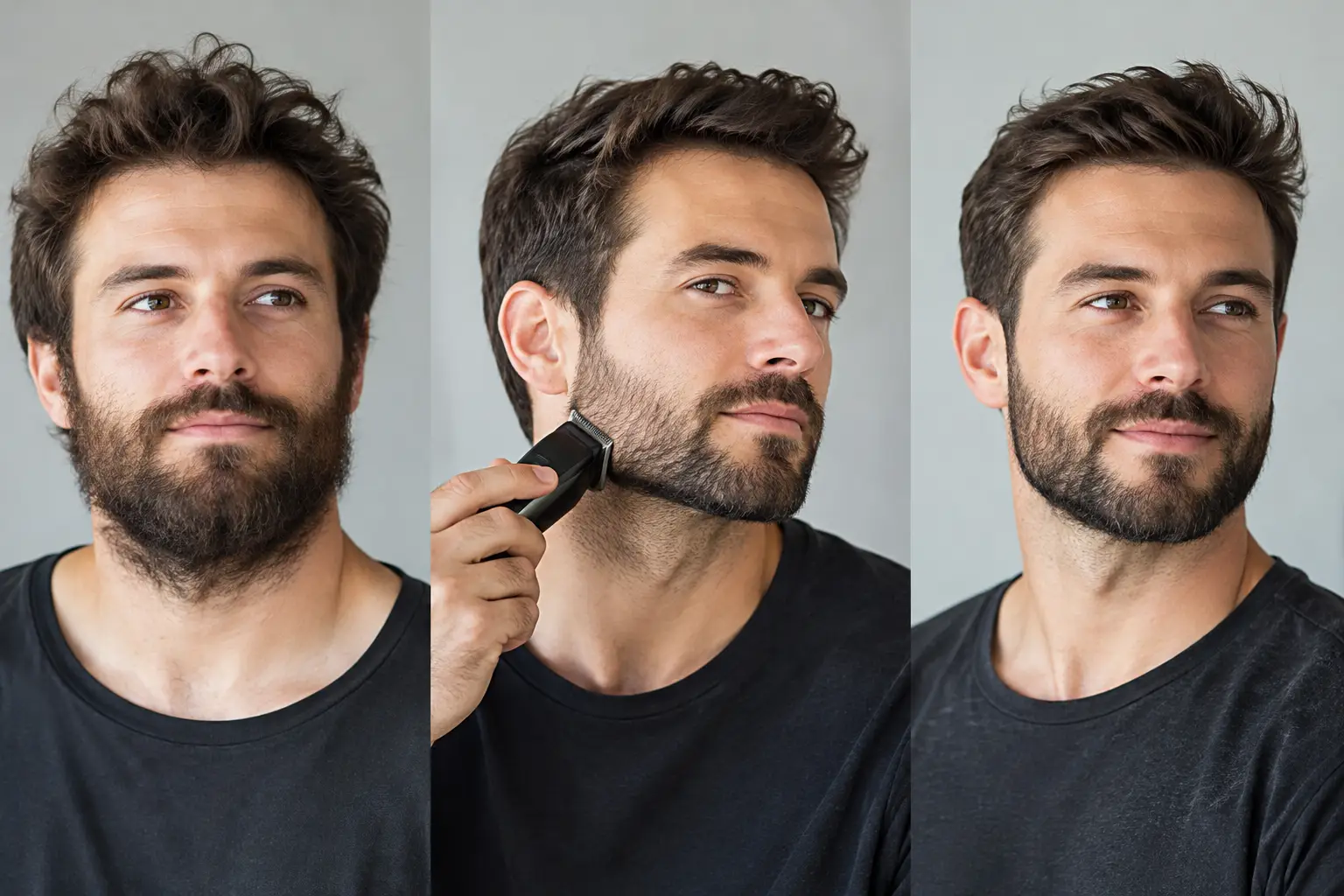
Facial hair changes the balance of the face as much as a haircut does. A proper beard trim begins with the beard’s natural density and growth pattern, then creates shape without making it look overly drawn on. The cheek line, moustache, jaw and neckline should work together.
The trade-off is straightforward: sharper lines create a more defined, formal finish, but they need regular upkeep. A softer, natural line grows out more forgivingly and can suit fuller or less even beard growth. Neither is automatically better. The right choice depends on your beard, the look you prefer and how often you want to maintain it.
Length matters too. Taking bulk out beneath the jaw can make a fuller beard look cleaner without sacrificing presence. Keeping the moustache neat prevents it from swallowing the upper lip. For dry or coarse facial hair, a quality balm helps condition the beard while offering light control. The result should feel groomed, not stiff.
The value of a traditional shave and facial treatment
A straight-razor shave is a service of precision and pace. Hot towels soften the beard and prepare the skin, while warm lather and careful razor technique create a close, refined finish. Done well, it is not hurried. The barber works with the direction of growth and treats the skin with respect, especially around the jawline and neck where irritation is common.
It is worth being realistic about sensitivity. If your skin is reactive, prone to ingrown hairs or affected by active irritation, tell your barber before the service begins. A close shave may still be possible, but pressure, direction and aftercare should be adapted. The aim is a comfortable result, not a red face for the rest of the day.
Hydrating facial treatments add another layer to the experience. Cleansing, exfoliation, warm towels and facial massage can help tired skin look fresher and feel calmer. This is particularly useful before an event, after a demanding week or when shaving has left the skin feeling rough. It is not a replacement for a sensible home routine, but it is a strong reset delivered by experienced hands.
Choose service level by the result you need
A tiered barber team gives clients a useful choice. A Junior Barber may be an excellent option for straightforward maintenance, supported by a clear house standard and senior guidance. A more complex restyle, technical fade, longer scissor-led shape or a significant change may call for a Senior or Master Barber with deeper experience.
Price should reflect time, training and the complexity of the work, not vague prestige. The most expensive appointment is not always necessary, but a lower-priced service is not automatically the sensible saving if you need correction work afterwards. Be honest about the result you want and ask which booking suits it.
At Rogue Razor Barbershop in Amsterdam East, that approach is built into the service model. Clients can select the level of barber and receive the same focus on consultation, meticulous finishing and a style that fits their character.
Maintenance keeps the signature style intact
Most sharp cuts lose their intended outline before they become obviously untidy. For many fades, a back-and-sides refresh between full appointments keeps the profile clean without removing the shape on top. A regular four-week haircut can be ideal for men who want consistent polish, although very short fades may need attention sooner and longer styles can often go longer.
The point is not to create unnecessary appointments. It is to find the rhythm that keeps your hair and beard looking deliberate, while still allowing enough growth for the style to develop properly. Your barber can recommend an interval after seeing how quickly your hair grows and where it loses shape first.
The right barber service should leave you looking sharper, but also more certain of what suits you. When the cut, beard work, shave or treatment is chosen with care, grooming stops feeling like an errand and becomes one reliable part of how you show up.
For a more professional advice and service
Book Online
at Rogue Razor Barbershop.