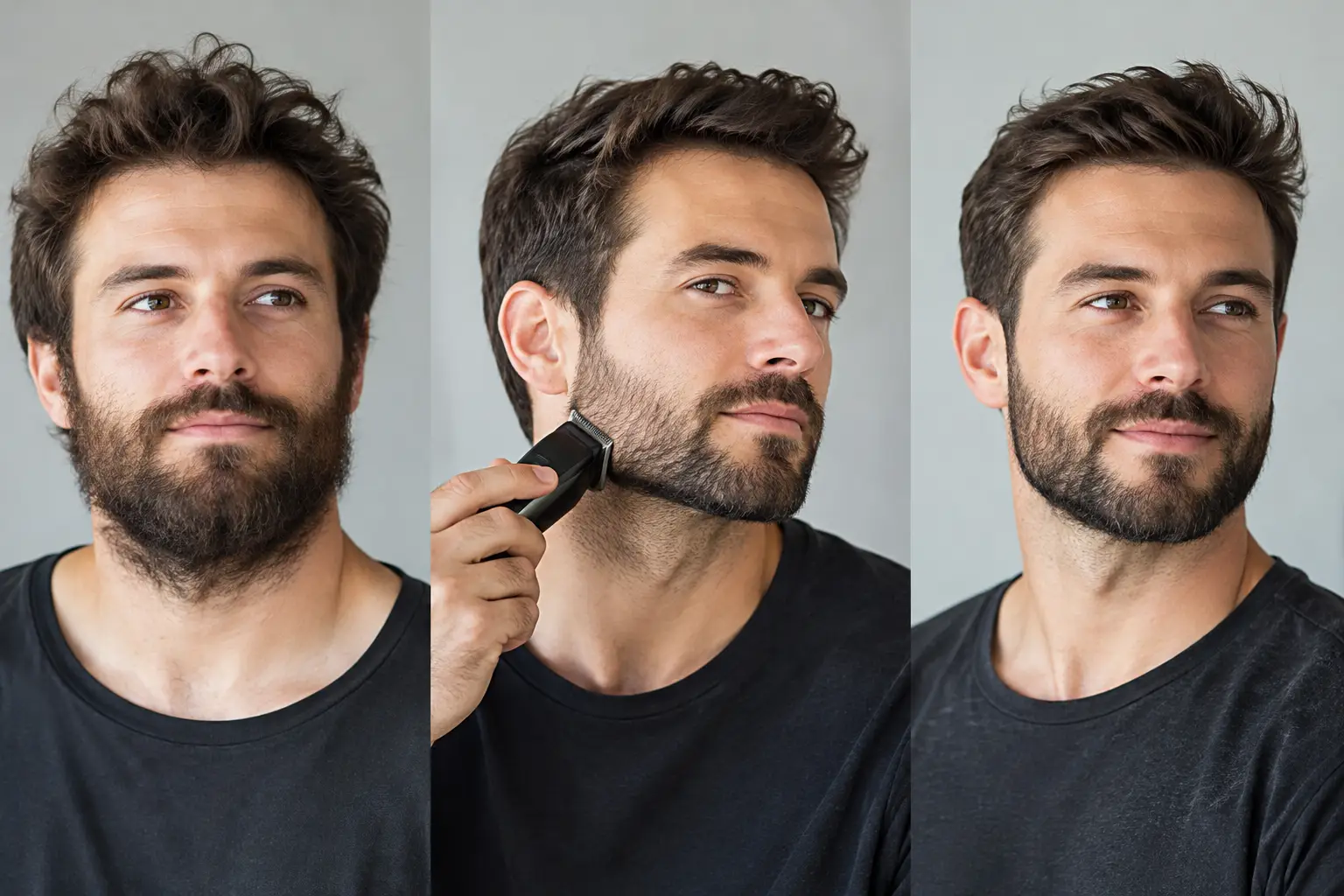

A haircut can look wrong for reasons that are more specific than simply being too short. Perhaps the fade sits too high, the crown has been cut against a stubborn growth pattern, the fringe has lost its weight, or the shape no longer works with your face. Corrective haircuts are not about pretending the problem never happened. They are about assessing what is left, restoring balance with skilled hands, and creating a clear plan for the weeks ahead.
The fastest fix is not always the best fix. Sometimes a barber can reshape a cut in one appointment. At other times, the most refined result comes from a precise tidy-up now, intelligent styling at home, and a follow-up once key areas have gained enough length. The difference is judgement.
What makes a haircut need correcting?
A haircut needs correction when its proportions no longer work. That may mean one side is heavier than the other, the transition from short to long is harsh, or the top has been disconnected from the sides in a way that makes the head shape look unbalanced.
It can also be a question of suitability. A style seen in a reference photo may work brilliantly on thick, straight hair but fight against fine, dense curls or a pronounced crown swirl. Good barbering is never just about copying a silhouette. It accounts for hair density, texture, growth direction, head shape, facial structure and how much time you actually want to spend styling each morning.
There are also cuts that look acceptable when you leave the chair but lose their shape after the first wash. This often happens when the hair has been over-texturised, the weight has been removed from the wrong area, or the styling has disguised unevenness rather than supported the cut. A proper corrective service looks at the haircut in its natural state, not only after product and a blow-dry.
Corrective haircuts start with an honest assessment
The first job is to establish exactly what has gone wrong and what can realistically be changed today. A barber should look at the hair dry and damp, check the neckline and sideburns, study the crown, and see how the hair falls when it is moved in different directions. This is where experience matters most.
A clear consultation is worth more than rushing straight into the cut. Explain what you dislike in practical terms: the sides feel too high, the top collapses forward, the fringe is uneven, or the back looks too square. If you have a photo from before the cut, it can help show the length and shape you want to return to. A photo of a future goal is useful too, provided it is treated as direction rather than a promise.
The right barber will be direct about the options. If the top is too short, more cutting cannot create length. But the sides may be softened, the outline refined and the shape redirected so it looks intentional while it grows. If one side has been taken tighter than the other, the correction may involve bringing the fuller side in slightly to restore symmetry. That is a trade-off, but often a better one than living with an obvious imbalance.
When going shorter is the smart move
Many clients worry that a correction automatically means losing more length. Sometimes it does. If a fade is uneven, a line is poorly placed, or bulk has been left in the wrong place, taking selected areas shorter can create a cleaner, more deliberate overall result.
A high or patchy fade, for example, may be improved by reworking the blend and adjusting the transition. The objective is not simply to make everything as short as possible. It is to rebuild a gradual change in length that follows the head naturally. On some head shapes, leaving a touch more weight around the upper sides prevents the cut from looking too narrow or too top-heavy.
For a crop, buzz cut or close taper, a shorter correction can be especially effective because the style depends on clean lines and even proportions. Precision around the temples, ears and neckline makes a significant difference, even when there is very little hair to work with.
When preserving length matters more
If the issue is an over-cut fringe, a top section that has been thinned too aggressively, or a crown that has been taken too short, preserving length is usually the priority. The barber may tidy only the areas that distract from the overall shape, then use styling to give the hair structure while it recovers.
This is particularly relevant for medium-length styles. Hair that has lost internal weight can become flat, wispy or difficult to control. Cutting more into it may make the problem worse. A better approach can be to leave it alone where possible, create a cleaner frame around it, and work with a product that adds grip without making the hair look stiff.
A matte clay can give short-to-medium hair separation and control. Powdered wax can lift roots where fine hair is falling flat. Sea salt spray can add a looser, textured finish before drying, although it should be used with restraint if the hair already feels dry. Product should support the correction, not hide poor shape beneath a heavy layer.
The areas that need the most care
Some parts of a haircut are less forgiving than others. The crown is one of them. Most men have a growth pattern at the back of the head that pushes hair in a particular direction. If it is cut too short or against its natural fall, it can stick up, split open or expose the scalp more than expected. A corrective barber will work with that pattern, often leaving enough length for the hair to settle rather than forcing it flat.
The fringe is another high-risk area. A fringe that has been cut too blunt can look heavy and rigid, while one that has been cut too short may simply need time. In the meantime, changing the direction of the parting, adding subtle texture or wearing the front slightly forward can make the length feel more balanced.
Then there is the transition between the top and the sides. This is where many disappointing cuts fail. A visible shelf of weight can make the head appear boxy. Too little weight can make the top look disconnected and unsupported. Correcting this area takes controlled scissor-over-comb work, careful clipper blending and an eye for the profile as well as the front view.
Do not try to fix it at home
The temptation to take a few hairs off yourself is understandable, especially when one corner, sideburn or neckline feels uneven. It is also how a manageable correction often becomes a larger one.
Home clippers are useful for maintenance only when you already understand your own cut and guard lengths. They do not replace the visual judgement needed to blend a fade, balance a crown or reshape a fringe. Cutting into a problem area without seeing the whole silhouette can remove the very length a barber needs to work with.
If you must manage the cut before an appointment, focus on styling rather than trimming. Wash out excess product, dry the hair in the direction you want it to sit, and use a small amount of the right product. Avoid trying to sharpen the hairline with a razor unless you are confident with the technique. A line that is taken too far back can take weeks to grow out naturally.
How long does a corrective haircut take to settle?
It depends on the issue, your growth rate and the style you want. Hair typically grows around one to one-and-a-quarter centimetres a month, but the visual difference can appear sooner around a short fade, fringe or neckline. A couple of weeks may be enough to soften an awkward area. A heavily over-cut top may need several weeks or longer before it can be fully reshaped.
This is why a maintenance plan is useful. Instead of waiting until the entire cut feels out of control, schedule a short refinement at the right point. The barber can clean the perimeter, keep the sides balanced and protect the length you are growing. Regular, considered maintenance produces a stronger result than allowing one bad cut to turn into several months of uneven growth.
At Rogue Razor Barbershop, the focus is always on a style that works beyond the chair: clean in profile, balanced through the crown and realistic for your daily routine. A corrective appointment should leave you knowing not only what has been improved, but how to wear it confidently until the next stage.
A bad haircut is frustrating, not permanent. Give the correction the patience it requires, resist the urge to over-fix it yourself, and let skilled shaping turn an awkward moment into a sharper next cut.
For a more professional advice or service
Book Online
at Rogue Razor Barbershop.