A fade can look razor-sharp on Saturday and strangely heavier by the following Thursday. The frustrating part is that the hair may not actually be growing at wildly different speeds. So, why fades grow unevenly is often less about the haircut going wrong and more about hair direction, density, head shape and the contrast built into a close blend.
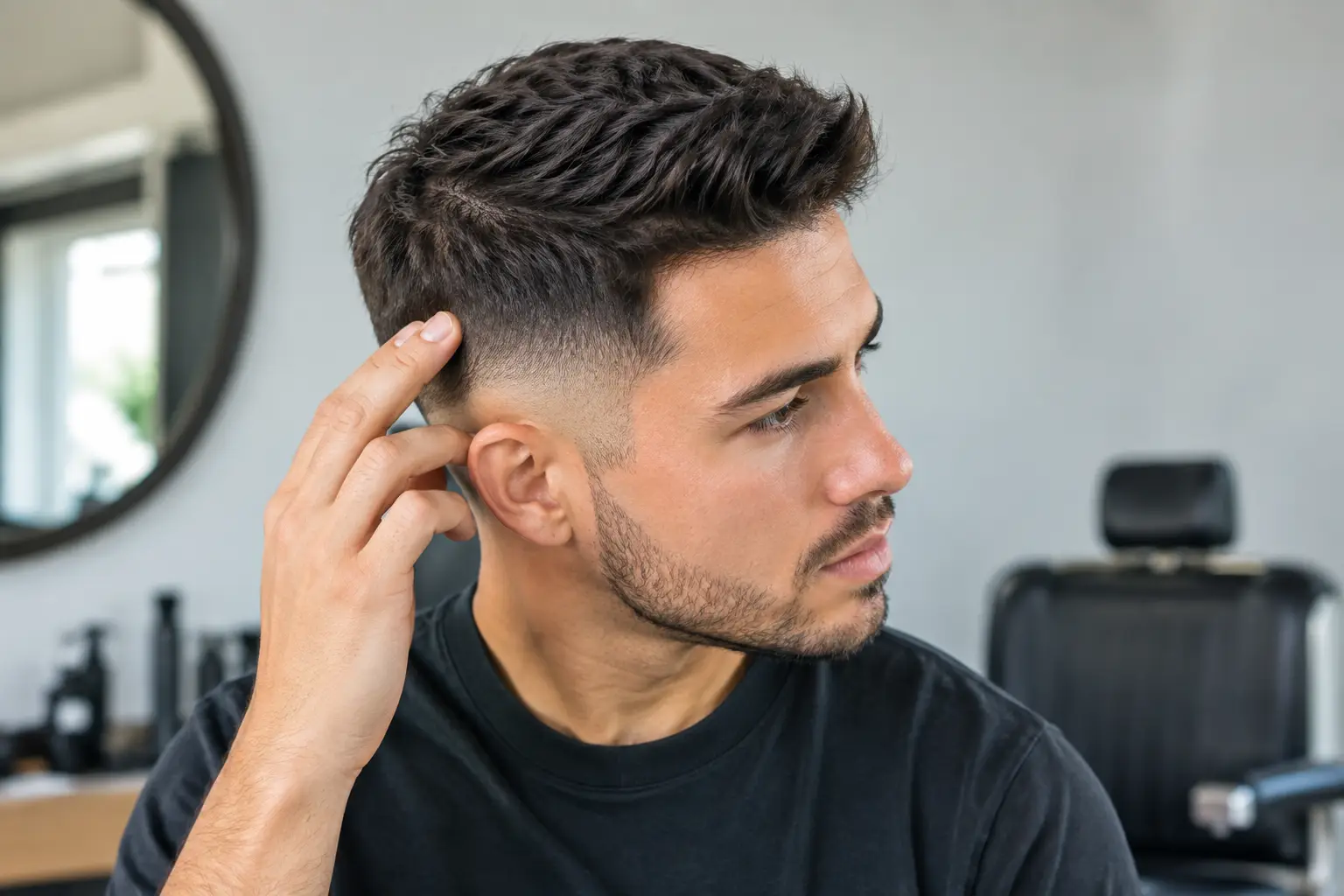
A good fade is a precision service. It moves gradually from skin or very short hair into longer lengths, with no visible line interrupting the transition. That clean graduation is exactly why regrowth becomes obvious so quickly. When hair returns, even by a millimetre or two, it changes the balance of the cut.
Why fades grow unevenly after a fresh cut
Most scalp hair grows at a broadly similar average rate, usually around one centimetre a month. But a fade does not grow out as one flat, uniform surface. It grows over curves, changes in density and different growth patterns. Your eye reads those changes as unevenness.
The sides of the head can also look fuller before the area around the temples or nape, particularly when the hair there is dense or coarse. A low fade may begin to feel bulky around the ear while still appearing tidy at the neckline. With a high fade, the contrast can return fast at the parietal ridge – the point where the head begins to curve towards the crown.
This is normal. It is also why a skilled barber assesses more than the reference photo. The best starting point for a fade depends on the shape of your head, the weight of your hair and how quickly you prefer to return for maintenance.
Growth direction changes the way a fade shows
Hair does not all leave the scalp in the same direction. Around the crown, it may spiral. At the nape, it can grow downwards, sideways or in a pair of opposing patterns. Near the temples, hair may sit forward while the rest of the side grows back.
When short hair follows a strong direction, it catches the light differently. A section growing against the grain can appear darker and thicker, even when it is the same length as the hair beside it. This is especially noticeable in a skin fade, where the clean, bare area makes any returning shadow stand out.
Your barber can work with these patterns by adjusting the blend, setting the weight line carefully and choosing the right finish. However, no cut can change the natural direction in which your hair grows. The goal is not a fade that looks identical from every angle for four weeks. It is a fade that grows out in the most balanced way possible for you.
Density and hair texture create different regrowth patterns
Fine hair tends to reveal scalp more easily, so a fade can remain visually soft as it grows. Thick, dark or coarse hair creates stronger contrast and may look like it has grown in quicker, even when the actual rate is no different.
Curly and coily hair adds another variable. Because the hair bends and contracts, its visible length can vary across the head. A precise fade can still look exceptional, but the maintenance rhythm may be different from someone with straight, fine hair. The same applies to men with a pronounced crown, a receding hairline or thinner patches at the temples.
This is where a personal consultation matters. The most flattering fade is not always the tightest one. Sometimes leaving a little more softness at the transition gives the cut a better lifespan and avoids an abrupt dark band appearing after a week.
Head shape affects how your fade grows out
A fade is applied to a three-dimensional surface, not a mannequin head. Flat areas, prominent occipital bones at the back of the head, and changes around the crown can all make regrowth appear uneven. On one client, a mid fade may look perfectly level. On another, the same placement can look as though it rises at the back once the hair starts returning.
An experienced barber builds the fade to complement those contours rather than forcing an artificial symmetry. That may mean subtly changing the height of the blend from one side to the other or retaining more weight in a particular area. It is not cutting corners. It is technical judgement.
The same principle applies if you sleep predominantly on one side, wear a helmet for commuting or train in a cap. These habits do not make hair grow faster, but they can flatten, separate or direct short hair differently. A little movement can expose the blend and make a dense area look more pronounced.
The fade style itself sets the maintenance schedule
The closer the fade, the faster it will appear to change. A skin fade delivers maximum impact on the day of the cut, but it also has the shortest-looking lifespan. Stubble returning through the lowest section can be visible within days, particularly with dark, dense hair.
A zero fade or very tight taper offers a similar crispness with slightly more softness. A low taper around the sideburns and neckline generally grows out more discreetly than a high skin fade because there is less exposed contrast across the side of the head. None is better in every situation. It depends on whether you value the boldest fresh-cut finish or a more forgiving grow-out.
For many clients, a back-and-sides refresh between full cuts is the practical answer. It keeps the perimeter clean, restores the fade and lets the top retain enough length for your chosen style. If you wear a short crop, buzz cut or textured top, a regular four-week haircut may be ideal. For a skin fade that you want looking immaculate at all times, two to three weeks can make a visible difference.
How to keep an uneven-looking fade under control
At home, the aim is not to recreate a barber’s blend. It is to keep the hair sitting as it should between appointments. Washing away product build-up matters, especially if your sides are fine or prone to lying flat. Heavy residue can make regrowth clump together, creating dark-looking patches and reducing the clean separation in the fade.
Use a small amount of product suited to the finish you want. A matte clay or powdered wax can add controlled texture to a short top without making it collapse into the sides. A sea salt spray can give lighter styles movement, but it should be used with restraint if your hair is already dry. The right product supports the cut; too much product can make even a well-blended fade look untidy.
Brushing or combing the hair in its natural direction after showering also helps. This is particularly useful around the crown, nape and temple areas, where hair can split unpredictably. If you blow-dry, use low to medium heat and guide the hair rather than blasting it randomly. Short hair still benefits from deliberate styling.
Avoid taking clippers to a visible dark patch unless you are confident about the guard length and blend. One pass too high can create a new line that is harder to correct than the original regrowth. A professional touch-up is usually quicker, cleaner and more cost-effective than repairing a home experiment.
When uneven growth deserves a closer look
Normal fade regrowth is cosmetic. Sudden bald patches, tenderness, redness, scaling or noticeable shedding are different matters. If you see a marked change in your scalp or hair density, speak to a qualified healthcare professional rather than trying to disguise it with a shorter fade.
For everyday unevenness, be specific with your barber. Mention if one side gets bulky first, if your crown sticks up after a week, or if you need a cut to stay polished for meetings, nights out or travel. Those details help shape the fade, the placement and the maintenance plan around your real routine.
At Rogue Razor Barbershop, a clean fade is treated as more than a quick clipper service. It is built around your growth pattern, face shape and the way you want to feel when you leave the chair. The right schedule will not stop your hair growing, but it will ensure your style continues to look intentional long after the first fresh-cut mirror check.
For a more professional advice or service
Book Online
at Rogue Razor Barbershop.