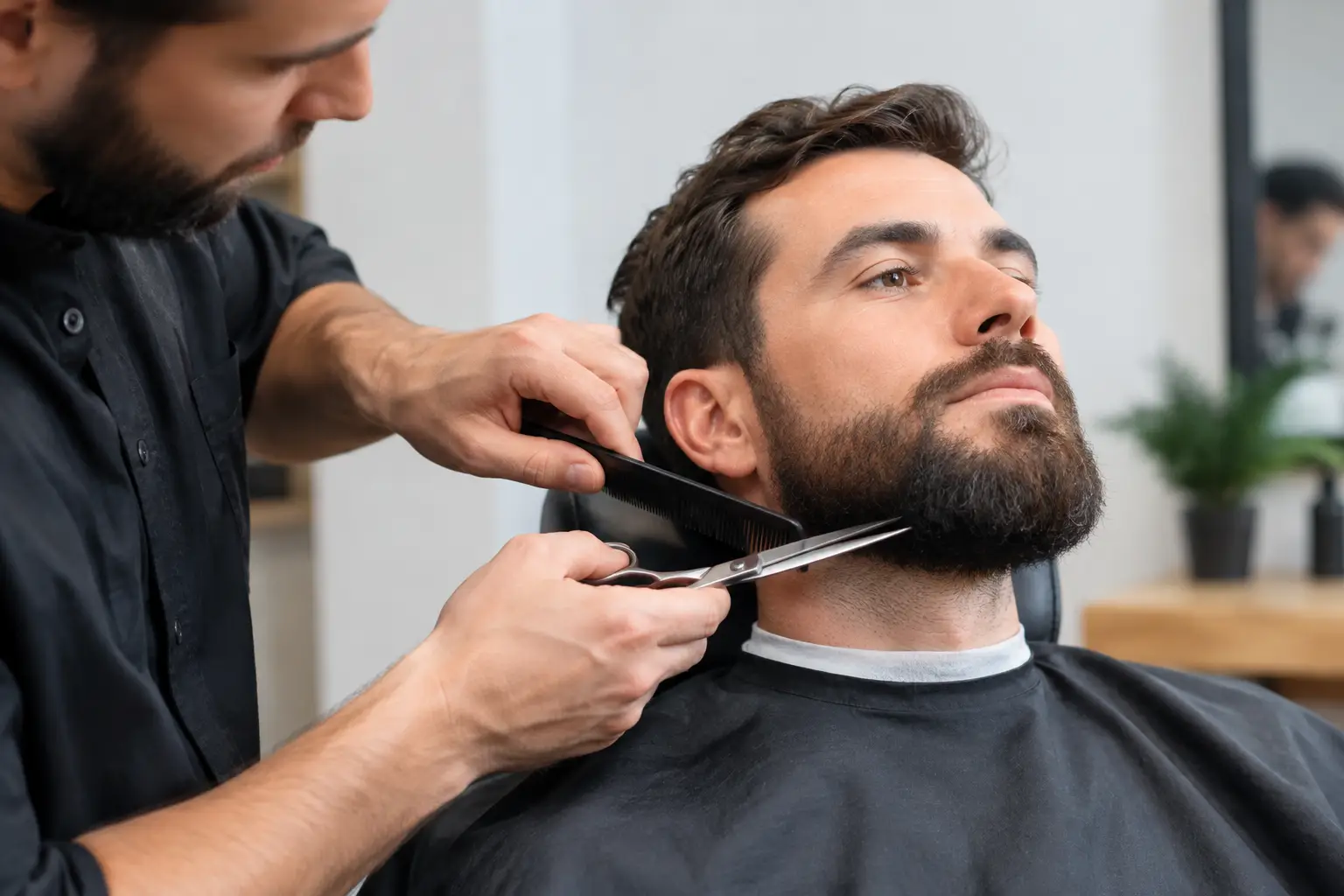
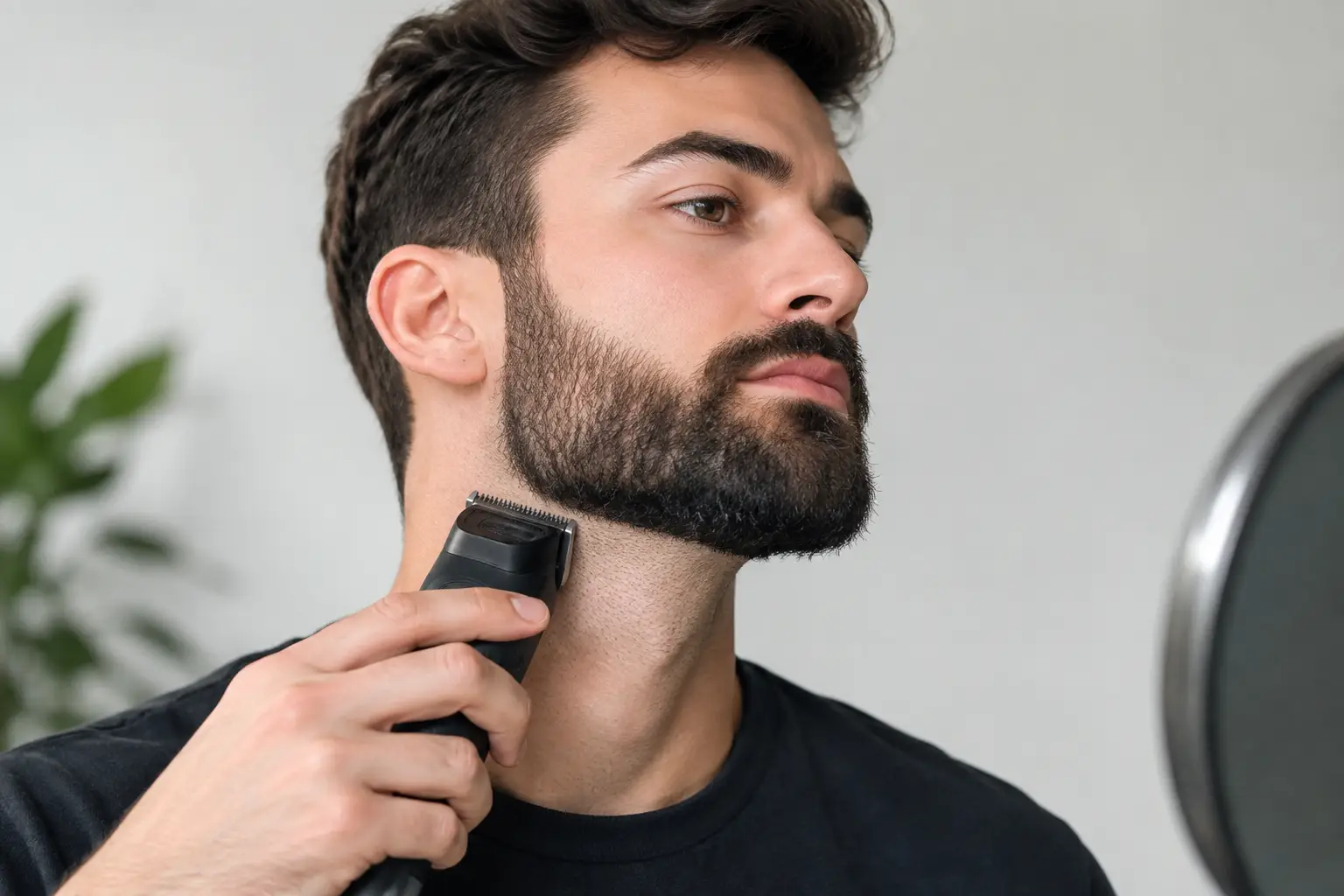
A strong beard can lose its shape the moment the neckline sits too high, too low or gets carved into a hard, unnatural curve. Knowing how to shape beard neckline properly gives the beard structure without making it look overworked. The aim is simple: a clean finish that still follows your face, your jaw and the density of your growth. And for shorter beards, defines the jaw.
A good neckline is not a straight line drawn across the throat. It is a subtle boundary that removes the neck growth while allowing the beard to look full from the front and natural from the side. Get that balance right and even a short beard looks more deliberate, sharper and better maintained.
How to shape beard neckline without taking it too high
The most reliable starting point is your Adam’s apple. Place two fingers above it, then use that point as the lowest part of your neckline. For londer necks add 1/2 finger to a 3rd finger. Shorter necks the reverse. From there, the line should rise gradually towards the back corners of your jaw, following a soft U-shape (looking from under the jaw) rather than a deep curve or a blunt horizontal line. Looking from the side connecting middle of the neck to corner of the jaw on both sides. You should work from the middle of the neck to the jaw corners. Not jaw corner to jaw corner.
This is a guide, not a rule carved in stone. Men with a longer face, a fuller beard or a prominent jaw often suit a slightly lower neckline because it keeps weight through the beard. If your beard is short, patchy or naturally higher on the neck, a modestly raised line can create a neater outline. The right placement should support your proportions, not follow a trend that does not suit them.
Stand in front of a well-lit mirror with your head level. Do not lift your chin to inspect the area, as this stretches the skin and can make you set the line too low. Look straight ahead first, then check both profile views. Your neckline should be almost invisible from the front but clean and intentional from the side.
Mark the shape before you trim
Before reaching for a trimmer, identify the centre point above your Adam’s apple. Imagine a line travelling from that point upwards to just behind each jaw angle, close to where the jaw meets the ear. The finished shape should have a gentle curve, with no sharp corners at the centre.
If you are shaping your neckline for the first time, use a washable beard pencil or a small amount of clear styling balm to map the line. This gives you a chance to assess the balance before removing any hair. Step back from the mirror after marking it. A neckline that appears subtle up close can look too high from normal conversation distance.
Prepare the beard for a precise line
Clean, dry facial hair is easier to control. Wash the beard if it has product build-up, then dry it fully and comb it down in its natural direction. Damp hairs sit longer and can disguise the true outline, which is how a neckline ends up uneven once it dries.
Use a beard comb or brush to expose the growth on the neck. If you wear a medium or long beard, combing is essential because longer hairs can fall over the boundary and make you trim too aggressively. Apply beard oil after shaping, not before. Oil can make hairs slick and harder to see clearly when defining the line.
Your tools matter. A quality beard trimmer with adjustable guards handles bulk removal, while a detail trimmer is useful for working close to the edge. For the closest finish, use a fresh razor only after the beard has been reduced and the line is already established. Trying to create the entire shape with a razor is possible, but it leaves less room for correction.
Trim in stages, not in one pass
Start below your marked neckline with a longer trimmer guard than you think you need. Remove the obvious neck growth first, working downwards from the line rather than pushing upwards into it. This preserves your reference point and prevents a rushed mistake.
Once the area below is clear, switch to a shorter guard or use the trimmer without one to work towards the edge. Keep the trimmer flat against the skin and make small, controlled strokes. Stop just short of the intended line on the first pass. You can always remove another millimetre, but regrowing a neckline that is too high takes patience.
Now refine the boundary with a detail trimmer. Work from the centre outward, alternating between the left and right side every few strokes. This keeps the curve balanced. Do not chase perfect symmetry at microscopic level: faces are not perfectly symmetrical, and an over-corrected line often looks less natural than a slight variation.
Use a razor only for the finishing work
If you want a close, barbershop-clean neck, soften the skin with warm water and a quality shaving cream or clear shaving gel. A transparent product is particularly useful because you can see the beard edge throughout the shave.
Shave below the line using light pressure and short strokes. On the neckline itself, work carefully with the direction of growth where possible. Neck skin can be sensitive, and shaving too aggressively against the grain may cause irritation, razor bumps or ingrown hairs. Stretch the skin gently with your free hand, rinse the blade frequently and avoid going over the same patch repeatedly.
Finish with cool water to remove residue, then pat the skin dry. Follow with an alcohol-free balm or moisturiser to calm the area. A clean neckline should feel refreshed, not tight or inflamed.
Match the neckline to your beard style
A short boxed beard benefits from a clearly defined but soft neckline. Because the beard has less length to disguise unevenness, the line needs regular maintenance and careful placement. Keep it low enough to avoid the floating-beard look, where the beard appears to stop halfway up the jaw.
For a fuller beard, the neckline can sit slightly lower and be less severe. The beard’s volume does much of the shaping work, so the goal is to clear the neck while preserving a strong foundation beneath the jaw. A hard razor line may look too artificial on a more natural, textured beard.
Stubble is different again. With minimal length, a subtle neckline can make a major difference, but it should not be overly crisp. A soft trimmer finish usually suits stubble better than a stark shaved edge, especially if you want an effortless, lived-in look rather than a highly sculpted one.
If your beard grows unevenly under the jaw, resist the urge to compensate by taking the entire neckline higher. Instead, keep the central point sensible and tidy the sparse areas gradually. Density can be managed through shape, length and styling, but a high neckline rarely makes a beard look fuller.
Common beard neckline mistakes to avoid
The most common error is setting the line too high. It exposes too much of the underside of the jaw, shortens the beard visually and can make even a well-grown beard look disconnected from the face. When uncertain, leave more hair. You can refine it after living with the shape for a day or two.
Another mistake is creating a straight line from ear to ear. The neck is rounded, your jaw is angled and the beard needs a curve to connect those forms. A harsh horizontal edge can look especially obvious when you turn your head.
Avoid trimming with your chin raised throughout the process. The skin stretches, the line shifts and your final result may sit lower than expected once you relax. Also avoid copying someone else’s neckline exactly. Beard growth patterns, neck length and face structure vary too much for a one-shape-fits-all approach.
Keep the neckline clean between barber visits
Most men need to tidy their beard neckline every three to seven days, depending on growth rate and how crisp they prefer the finish. Rather than reshaping it each time, treat maintenance as clearing the growth below an established boundary. This protects the original structure.
Check the line in natural light before any important meeting, event or night out. Bathroom lighting can hide uneven patches or leave you with a line that looks different outdoors. A quick comb, a little beard balm and a clean neck can make the whole beard appear fuller and more considered.
For a new beard shape, a major length change or a neckline that never seems to sit right, professional guidance is worth it. A skilled barber can place the line around your jaw, beard density and personal style, then give you a clean template to maintain at home. At Rogue Razor, that detailed finishing work is part of building a signature style that looks sharp long after you leave the chair.
Your neckline does not need to announce itself. When it is shaped well, it simply gives your beard the kind of clean, confident structure people notice without quite knowing why.
For a more professional advice or service Book Online at Rogue Razor Barbershop.