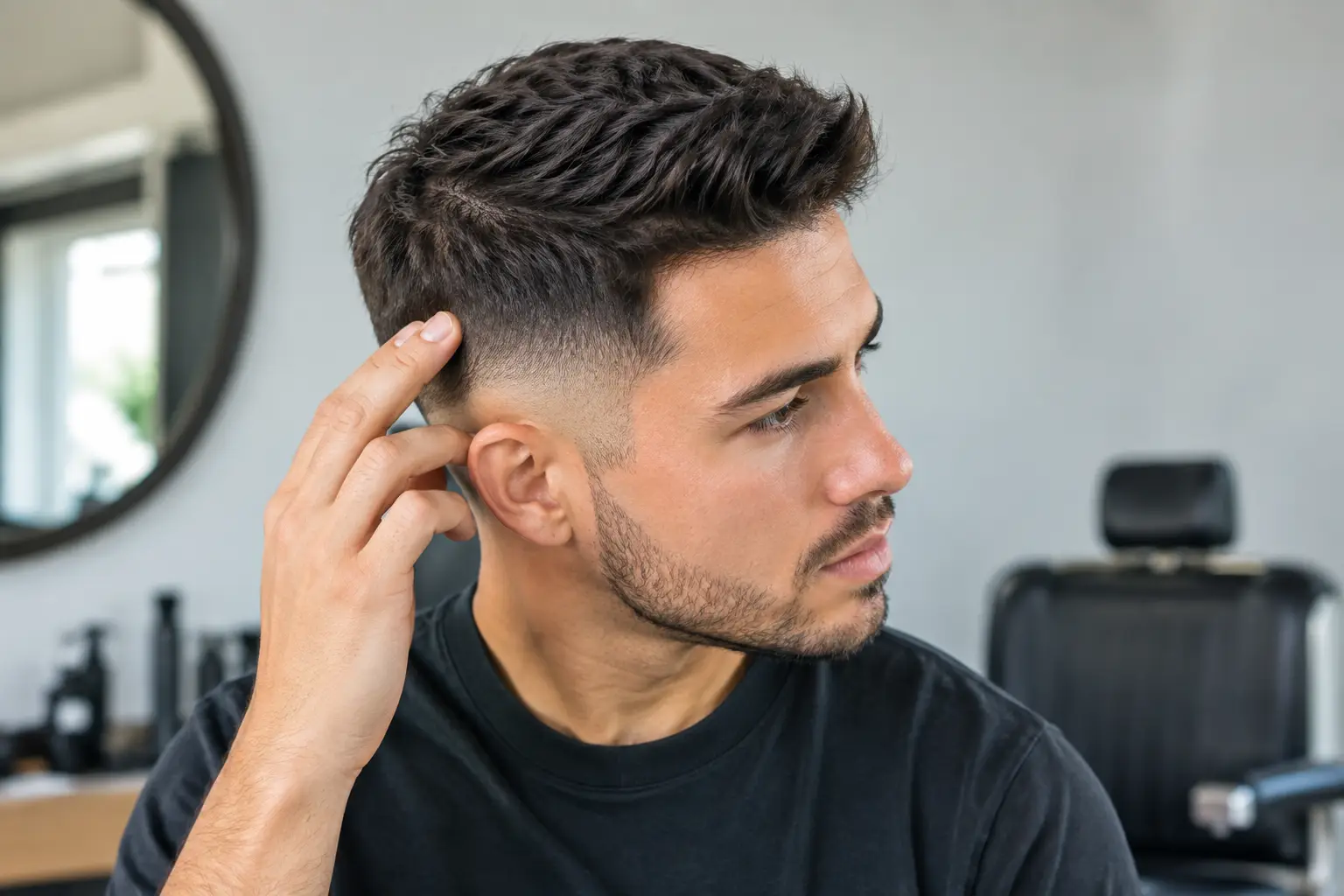
A good haircut does more than follow a trend. It brings proportion to your features, works with the way your hair actually grows and gives you a sharper outline before you have said a word. If you are asking, “what haircut suits my face shape?”, start there – but do not stop there. Your hair density, beard, lifestyle and appetite for maintenance all matter just as much.
The strongest cuts are not copied straight from a photo. They are tailored with a trained eye: more height where it improves balance, less width where it overpowers the face, and clean detailing that holds its shape between appointments.
What haircut suits my face shape?
Face shape is a useful starting point, not a rulebook. Stand in good natural light, pull your hair back and look at the widest point of your face, the length from forehead to chin, and the shape of your jawline. You may sit clearly in one category, or fall somewhere between two. That is completely normal.
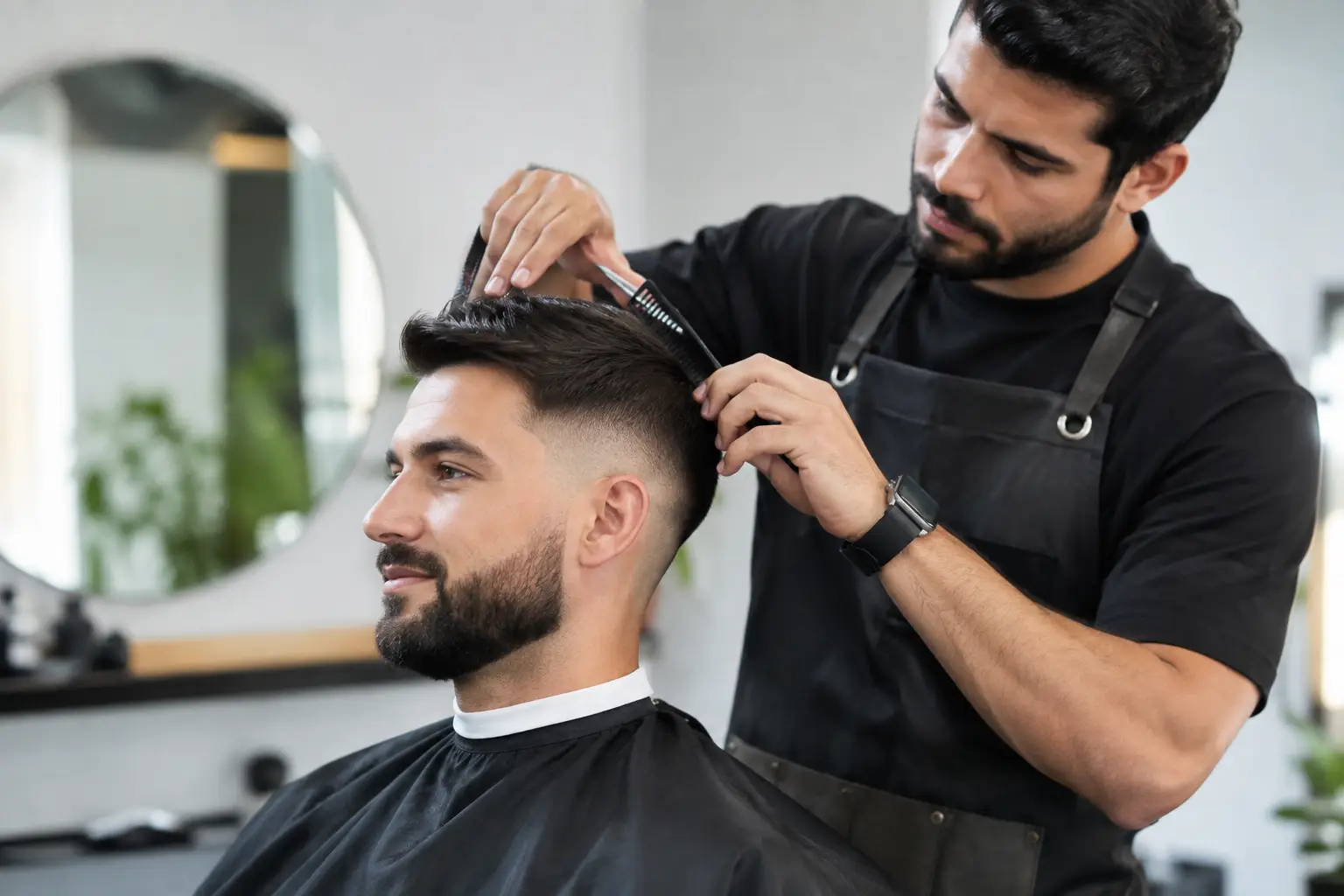
A barber will also assess your head shape from every angle. A haircut has to look right from the side and back, not just in the mirror from the front. The goal is balance: a cut that strengthens your best features without feeling overly engineered.
Oval face shape
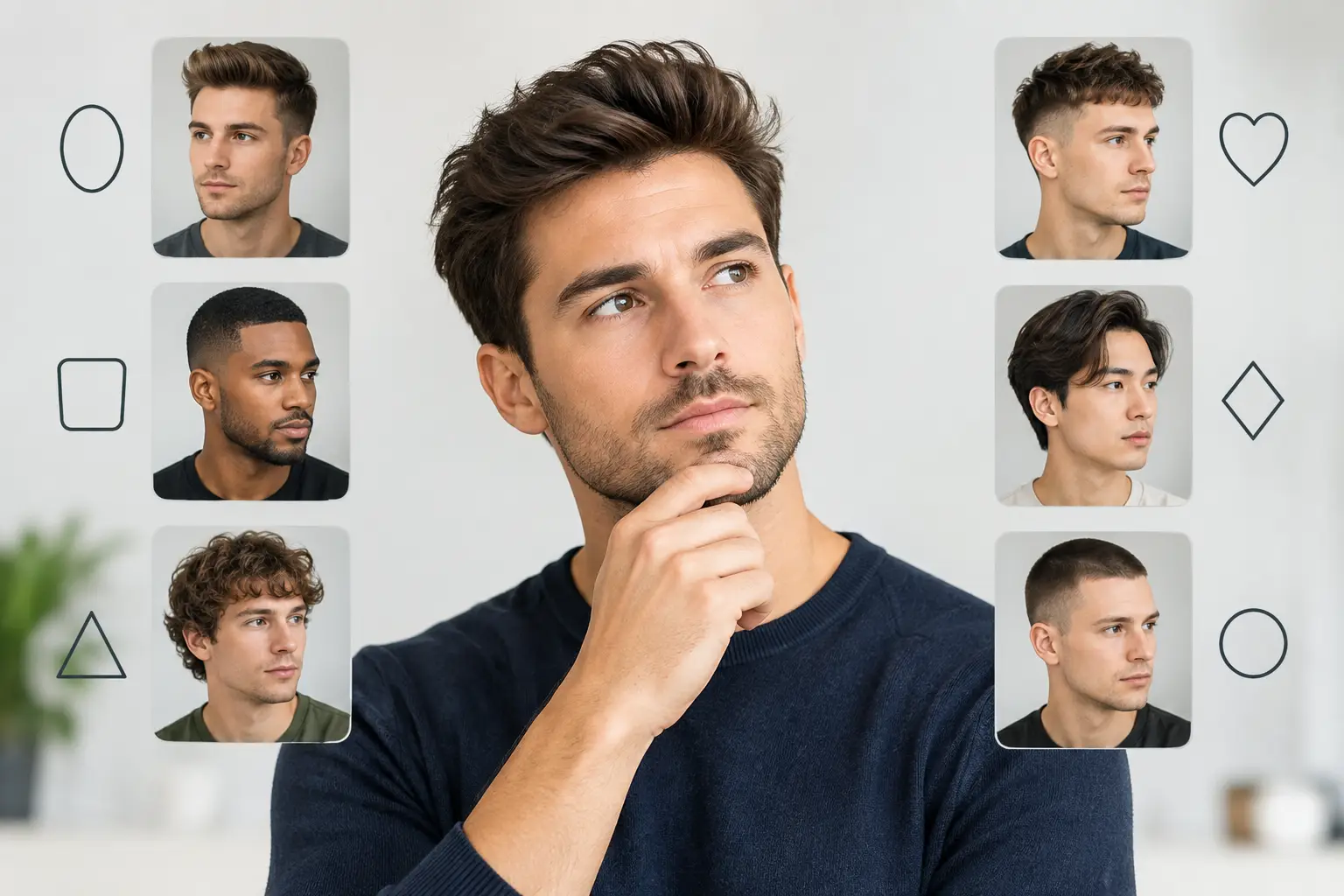
An oval face is longer than it is wide, with a softly rounded jaw and forehead that is slightly wider than the chin. It is the most versatile face shape for men’s haircuts. Textured crops, side parts, classic tapers, quiffs and modern pompadours can all work well.
The trade-off is proportion. Too much height combined with ultra-tight sides can make an already long face look longer. A low or mid fade, with texture and controlled volume on top, usually keeps the result confident and natural. If your hair is thick, a barber can remove weight without leaving it flat or lifeless.
Round face shape
A round face has similar width and length, with fuller cheeks and a softer jawline. The aim is often to create a little more structure and vertical lift. A textured quiff, a high fade with length on top, or a short back and sides with a defined side sweep can add angles where the face is naturally softer.
Avoid building too much volume at the sides. A heavy fringe that sits low and wide can also make the face appear shorter. That does not mean fringes are off limits. A broken, textured fringe with a tighter silhouette can look excellent, especially when paired with a clean fade and crisp temple detailing.
Square face shape
A square face is defined by a broad forehead, strong jaw and fairly equal width and length. It already has presence, so the best haircut often softens the edges slightly while retaining the strength of the shape. A classic side part, textured crop, Ivy League cut or medium-length style with movement will all complement it.
Very sharp, boxy lines at every point can make the overall effect feel severe. A skilled barber may keep the fade clean but use texture through the top and a less rigid finish at the fringe. A short beard with rounded, considered edges can add depth without competing with the jawline.
Oblong or rectangular face shape
An oblong face is noticeably longer than it is wide, often with a straighter cheek line and a longer chin. Here, restraint is the key. You want enough length to style, but not a tall, exaggerated silhouette that adds even more vertical length.
A textured French crop, a side-swept style, a low taper or a medium-length cut with modest volume are reliable options. Keeping some fullness at the sides creates better balance than taking the fade too high and too tight. A fringe can work particularly well because it visually shortens the face, provided it suits your hairline and daily styling routine.
Diamond face shape
Diamond-shaped faces are widest at the cheekbones, with a narrower forehead and chin. Haircuts that add some width or softness around the forehead tend to be especially flattering. Think textured fringe, side-swept length, a relaxed quiff or scissor work with a natural taper.
Extremely tight sides can overemphasise prominent cheekbones, particularly if the top is left very tall. Instead, ask for a balanced blend that retains a little width through the upper sides. If you wear facial hair, modest fullness at the chin can bring welcome balance to a narrower jaw.
Heart and triangle face shapes
A heart-shaped face is broader through the forehead and narrower at the jaw, while a triangle shape is usually wider at the jaw than the forehead. They need different solutions. Heart-shaped faces often suit a textured fringe or medium-length style that reduces the apparent width of the forehead and avoids excessive volume at the crown.
For a triangle-shaped face, more volume and texture through the top can balance a stronger jaw. A quiff, brushed-back style or fuller crop can work well, while sides should not be shaved down so tightly that the lower face appears even wider. The details are subtle, but they change the whole impression.
Your hair type can change the answer
The haircut that suits your face shape still has to suit your hair. Fine hair can struggle to support a large pompadour without product and regular styling. Thick, coarse hair can create unwanted width if it is simply clipped short rather than carefully shaped. Curly hair has its own direction, shrinkage and density to consider.
A good consultation looks beyond the category on a chart. Your barber should check whether you have a strong crown, a cowlick at the fringe, a receding hairline or patches that grow in different directions. These are not faults to hide. They are practical details that determine where weight should stay, where it should be reduced and how the haircut will settle after a week or two.
For instance, a crop may be ideal for a round face, but a heavy blunt fringe can be difficult if your hair springs upwards at the front. A slightly longer, broken texture may offer the same face-balancing benefit with far less effort each morning.
The beard is part of the architecture
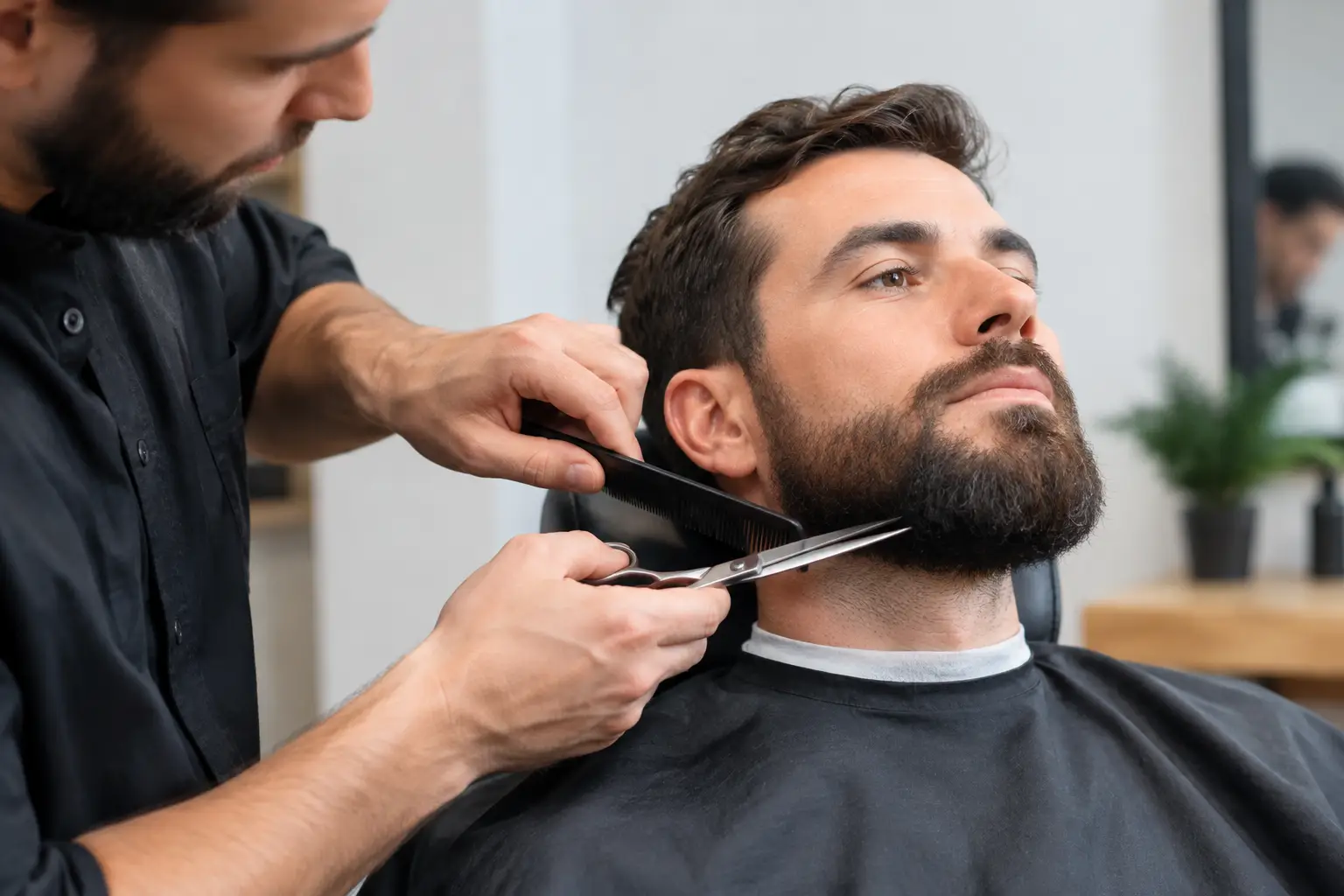
Your beard changes the visible shape of your face, which makes it one of the most effective tools in a complete grooming plan. It can add length to a round face, bring width to a narrow chin or soften a powerful square jaw. It can also throw a well-planned haircut off balance when it is left without shape.
The neckline, cheek line and bulk through the jaw should work with the cut rather than sit separately from it. A clean fade paired with an unstructured beard can feel unfinished. Equally, a precisely shaped beard with an overly severe haircut can look too hard. The best result has a consistent level of refinement from hairline to jaw.
Choose a style you will maintain
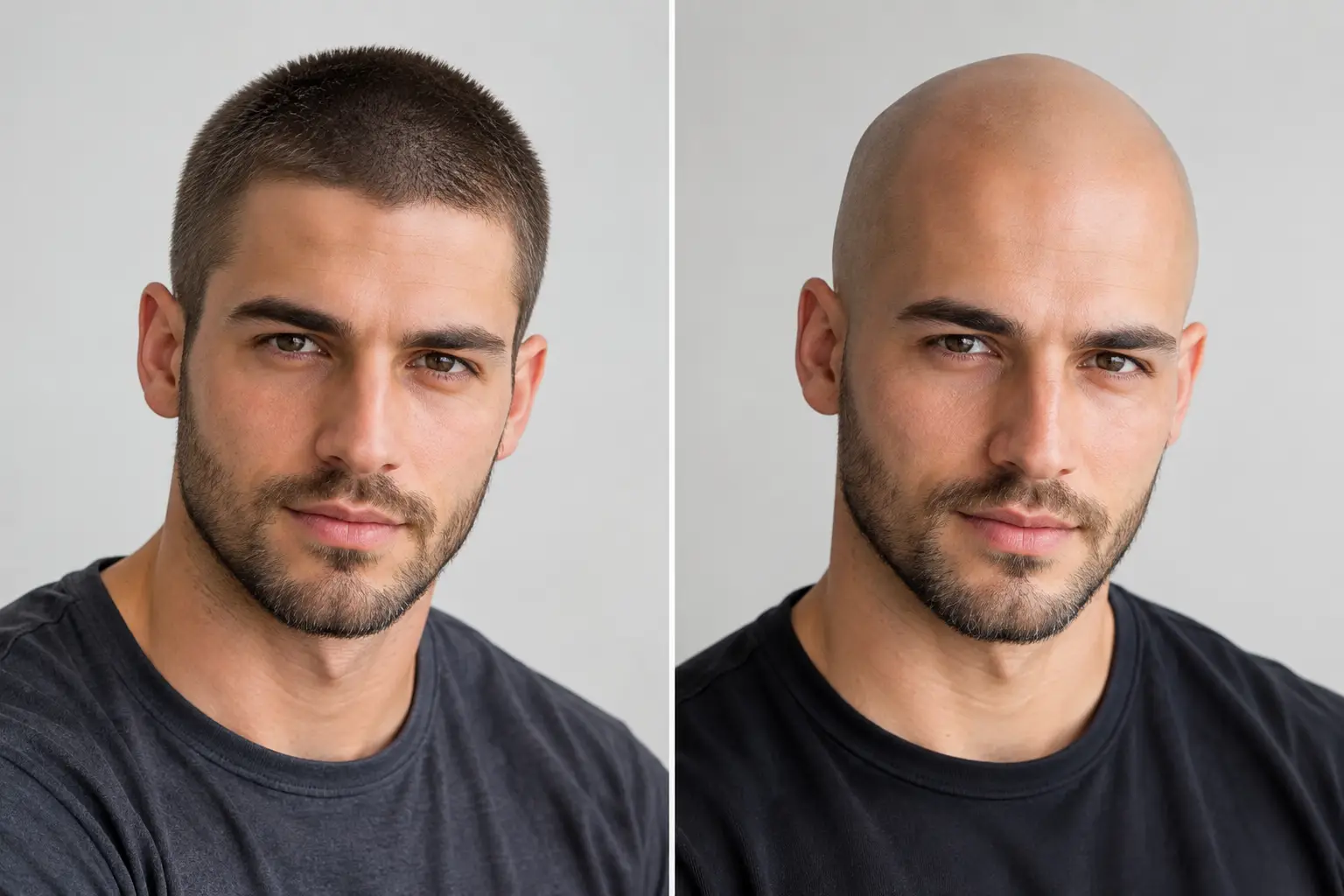
Be honest about what happens on a Tuesday morning. A high skin fade can look exceptionally fresh, but it loses its sharpest edge sooner than a softer taper. A longer textured style offers versatility, though it asks more of your blow-drying and product technique. A buzz cut is low effort day to day, yet it exposes head shape, hairline and beard detail more than most styles.
There is no prize for choosing the most complicated haircut in the room. The right cut is one that looks intentional on day one and still looks like you on day 21. If you prefer minimal styling, a tailored crop, buzz cut or classic short back and sides may serve you better than a high-volume style that needs a full routine.
For men who like a consistently clean finish, regular maintenance matters. Back-and-sides touch-ups keep a fade controlled, while a full appointment every few weeks allows the shape on top to be reset before it loses direction.
Bring the right brief to the barber
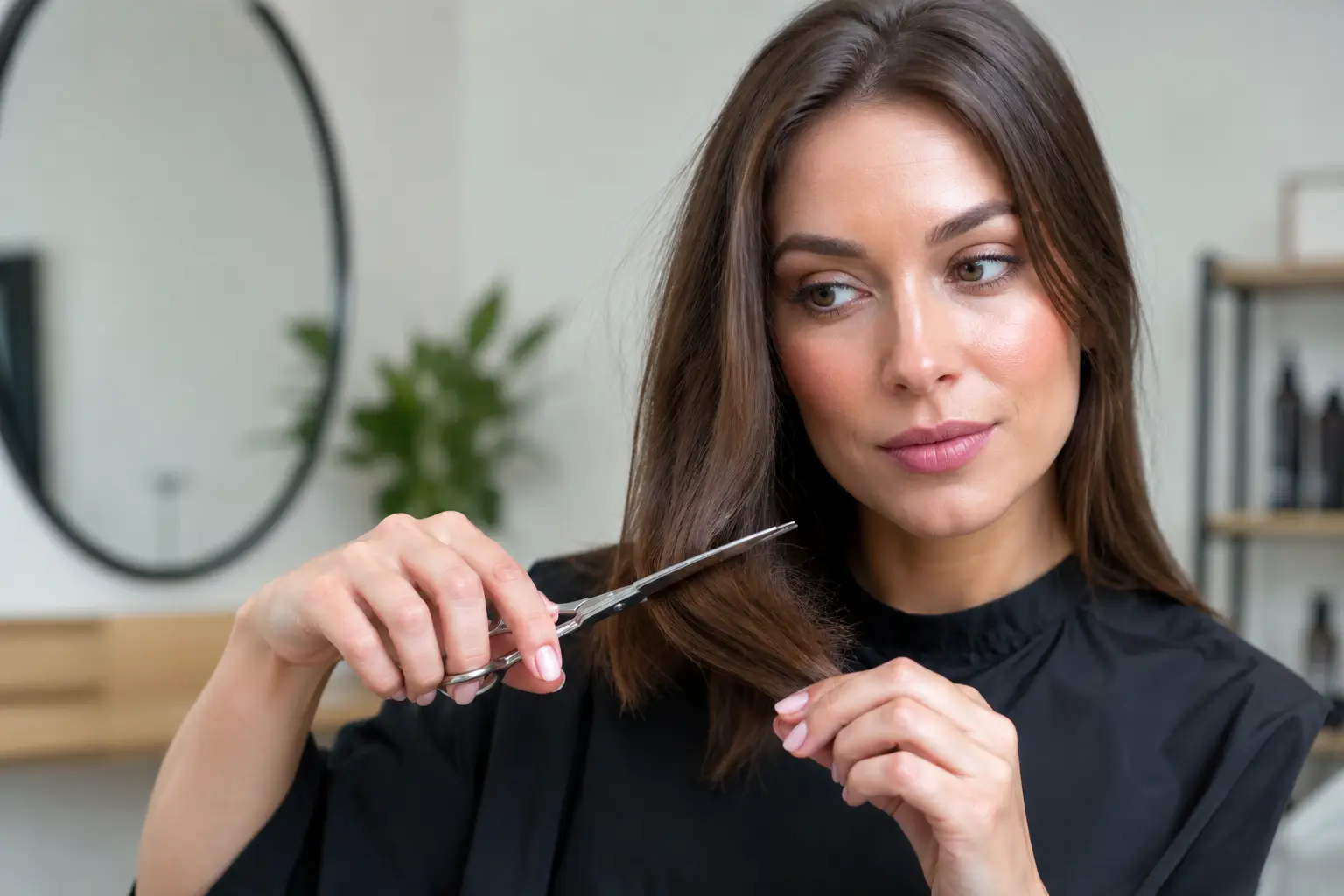
A reference image is useful, but it should start a conversation rather than dictate the result. Tell your barber what you like about it: the fringe, the taper, the texture, the way it frames the face. Also explain what has not worked in the past, whether that is a crown that sticks up, sides that become too bulky, or a fade that feels too exposed.
At Rogue Razor Barbershop, that consultation is where precision meets personal style. The right barber will translate your preference into a cut that respects your face shape, hair behaviour and routine, then finish it with the detail that makes a fresh cut feel complete.
Your best haircut should not make you feel like someone else. It should make the version of you that walks into the room feel more considered, more confident and ready for whatever is next.
2 responses to “What Haircut Suits My Face Shape? Men’s Guide”
[…] or evening out. A barber can advise on proportions and finish the shave so it works with your haircut, head shape and personal […]
[…] feel like part of your complete presentation, alongside the cut, fade, shave or beard shape that suits your face and personal […]